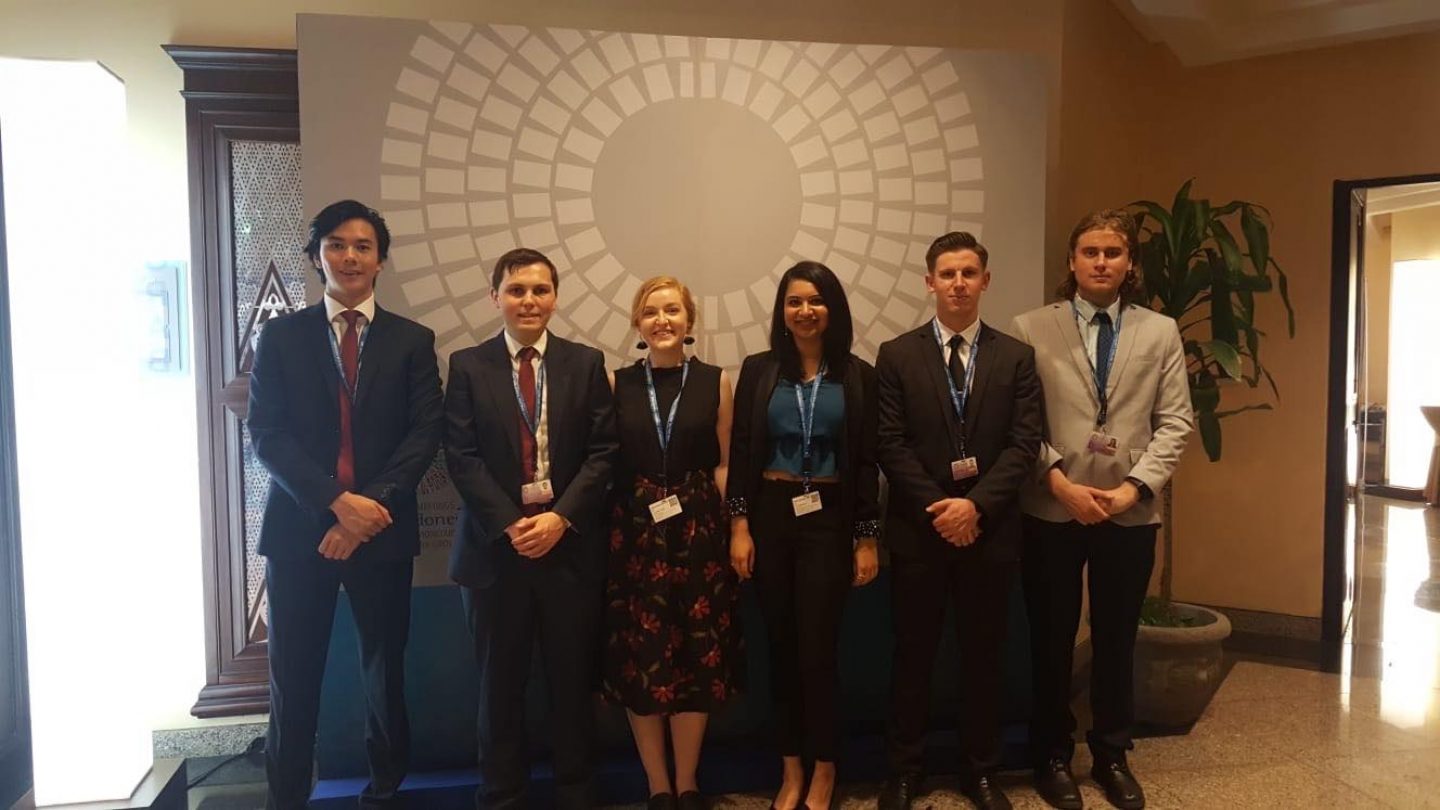
Day two at the IMF/World Bank annuals was just as charged as the first. Forums and panel discussions on a range of issues, a meeting with World Bank executive director Jason Alford, seeing IMF director Christine Lagarde and World Bank president Jim Kim in the flesh and rocking up to the Australian Treasury reception. My ability to get through the 12-hour day without caffeine has certainly surprised me, but honestly, it’s the ideas you hear and the people you meet that keeps you going.
Across today’s sessions on the future of work, the relationship between disruptive technology in inclusive development, the resurgent growth of East Asia and failed public-private partnerships (PPPs), the pertinent theme was the precarious but potentially world-changing role that the private sector can play in economic growth and development. A prevalent manifestation of this notion is PPPs – partnerships between governments and the private sector in the provision of public services and infrastructure.
At the meetings, many have preached the dangers and pitfalls of putting too much power in the hands of corporations. PPPs can be financially risky, as is the case of the Nya Karolinska Solna hospital in Sweden, a private hospital whose cost rocketed from €1.4 billion to £2.4 billion, and it is known as “the most expensive hospital in the world”. PPPs can have adverse social impacts; the privatisation of water provision in Jakarta made monthly bills unaffordable, forcing them to rely on wells or expensive jerry cans. Caution must be taken by governments in engaging with PPPs. A joint Civil Society Organisation report on failed PPPs recommends that governments cease aggressive promotion and incentivising of PPPs, rather, publicly acknowledging their associated risks. It stresses the importance of responsible, transparent and environmentally and fiscally sustainable financing for public services, which certain PPPs may not offer, particularly where commercial interests trump public interests.
However, there are prominent voices who laud the efficiency and capital that the private sector can bring, with PPPs promoted at many of today’s forums and events. In a panel discussion on economic growth in the East-Asian region, Lim Guan Eng, finance minister of Malaysia, argued that the private sector must take the lead in ensuring Malaysia can escape the ‘middle income trap’, by which economic growth slows after a certain level of income is reached. He cited the efficiency gains and technical knowledge and expertise of the private sector as important justifications for the use of PPPs, particularly where technology is involved. A major example of where the lack of a PPP has cost Malaysia financially was during the genesis of Grab Rideshare, which was initially a Malaysian company but quickly changed hands to Singapore after the Malaysian government refused to offer financial support.
Moving towards an Australian context, the overlapping of the public and private sector presents these universal challenges but also unlimited potential. As part of my overall experience attending the IMF/World Bank Annuals, I am writing a research policy paper on how the Australian government can better support work-integration social enterprises, that is social enterprises whose missions involve helping disadvantaged groups obtain employment. I am particularly concerned about employment rates for people with disabilities. In 2012, the ABS reported that 52.7% of all working-age Australians were not participating in the labour force, and shockingly Australia is ranked 27th out of 27 OECD countries for the relative poverty risk of people with disabilities. I believe social enterprises offer an innovative solution to combatting this issue, and one of my policy recommendations looks at how the public sector can partner with the social enterprise space through ‘Social procurement’. For example, if the Victorian government wants to build a new bridge, social procurement clauses will ensure that the government obtains its physical and human resources from social enterprises or businesses who will have an additional social impact beyond the scope of the public project. A simple example of this is in Sydney, where the City of Sydney government only purchases its catering from a social enterprise which offers hospitality training to unemployed members of society, with a focus on Sydney’s Indigenous population.
This week, I have been able to bounce my ideas off a range of individuals such as Anele Mkuzo of the African Entrepreneurship Initative, and the content of the events here has reassured me that my area of research is relevant, topical and universal. We have the freedom to approach anybody we like here, and as somebody fascinated by Myanmar’s history and politics, I was compelled to approach Thet Zaw Htwe from Spectrum Sustainable Development Knowledge Network. I have organised a meeting with him today and am excited to hear about the challenges and opportunities that his organisation faces within such a complex political environment. Bring on Day three.

 Youthful Reflections on the 2018 IMF/World Bank Annual Meetings